
Seed quality plays an important role in agricultural production. Before seeds are packed, stored or prepared for sowing, they often need to be cleaned and separated according to size and quality. For small farms, seed producers and processing units, however, installing a large commercial seed processing machine may not always be practical.
This is where a Mini Seed Grader Machine can be useful.
A compact seed grading machine is designed to provide essential screening, scalping, grading and air aspiration functions while occupying considerably less space than conventional high capacity equipment. For users processing relatively small batches, a Mini Seed Grader 200 kg/hr can provide a practical solution without requiring a full scale seed processing plant.
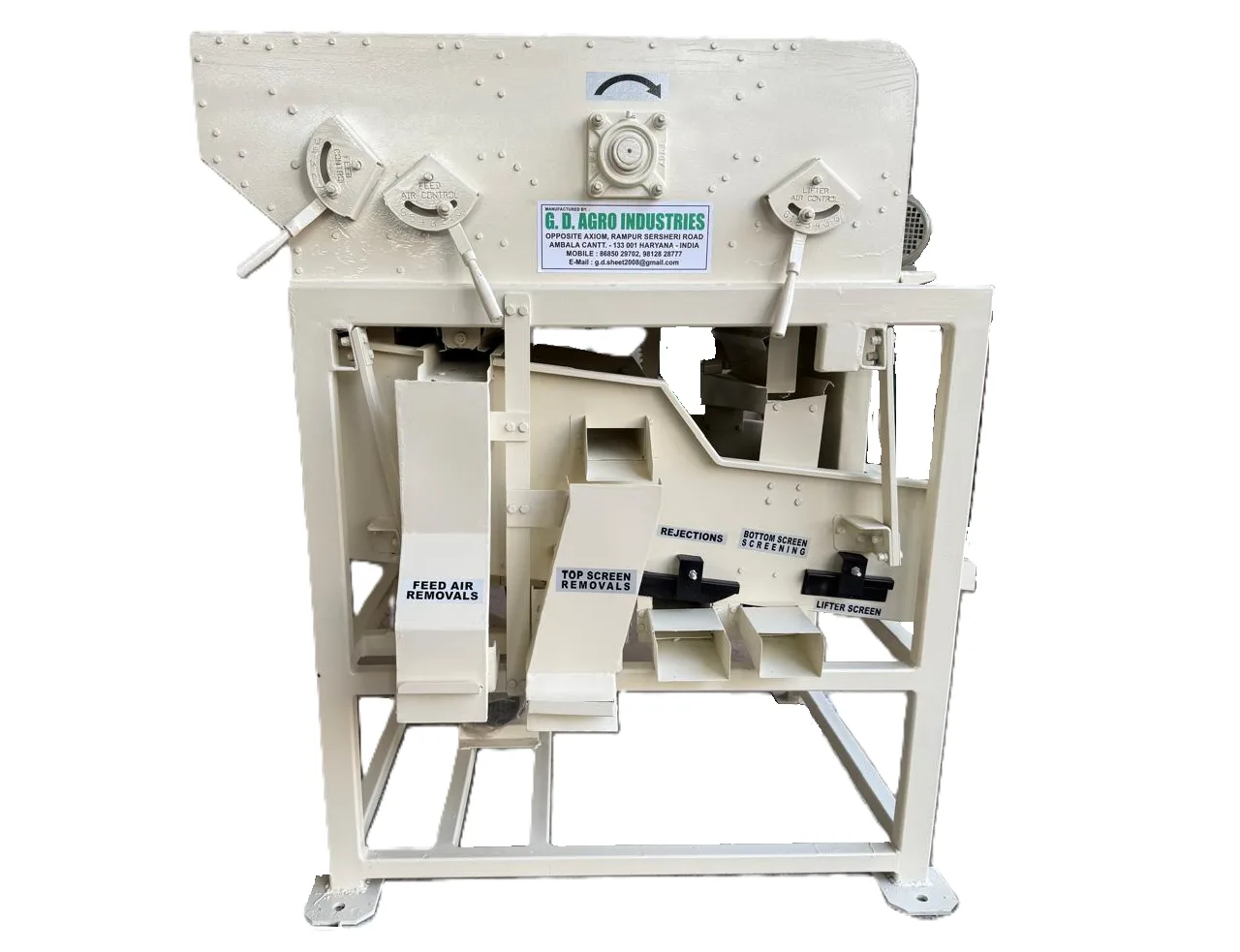
G.D. Agro Industries has developed the NEO-1K Mini Seed Grader, with an approximate capacity of 200 kg per hour based on wheat, specifically for small scale seed and grain processing requirements.
What Is a Mini Seed Grader Machine?
A Mini Seed Grader Machine is a compact mechanical system used to separate seeds or grains primarily according to particle size. The material passes through screening sections fitted with suitable sieves, allowing different fractions to be separated.
Unlike a basic cleaner that mainly focuses on removing unwanted material, a mini seed grading machine is designed to perform size based separation as part of the processing operation.
The NEO-1K is a 200 kg/hour seed grader equipped with three screen sections and three screen layers. It also includes one scalping section, two grading sections and two air aspiration points.
This configuration makes the machine suitable for applications where a compact small seed grader machine is required rather than a conventional 1 TPH or larger capacity machine.
Why Was a 200 kg/hour Seed Grader Developed?
Traditionally, many commercial seed processing machines are designed for significantly higher capacities. While these machines are useful for large processing plants, they may not be the most practical option for every user.
Small farms, seed growers, research facilities, agricultural institutions and small seed businesses may process only a few hundred kilograms of material at a time.
For such applications, a 200 kg seed grader can offer a more appropriate processing scale.
The Mini Seed Grader was developed to address this requirement by combining essential seed cleaning and grading functions in a compact machine.
How Does the Mini Seed Grader Work?
The working process can be understood in a few basic stages.
1. Feeding
Seed or grain material is introduced into the machine through the feeding arrangement. The material is distributed toward the screening section for processing.
2. Scalping
The first screening stage performs scalping. Larger unwanted particles can be separated before the material moves through the grading sections.
3. Size-Based Screening
The material passes through multiple screen layers. Different sieve openings allow seeds and grains to be separated according to their size.
The NEO-1K has three screen sections and three screen layers, providing multiple stages of screening.
4. Grading
The machine includes two grading sections. Depending on the crop and sieve selection, the material can be separated into different size fractions.
5. Air Aspiration
The machine also incorporates two air aspiration points. Air separation helps remove lighter materials and impurities from the product stream.
6. Sieve Cleaning
During operation, material can accumulate on screening surfaces. The machine uses a rubber ball sieve cleaning system to help keep the screens functional during continuous operation.
The actual separation performance can vary depending on crop type, moisture, feed rate, seed condition, sieve selection and the amount of impurities present.
Key Features of the Mini Seed Grader
The NEO-1K Mini Seed Grader Machine has been designed around the requirements of small scale seed and grain processing.
Main features include:
- Approximate capacity of 200 kg/hour based on wheat
- Compact machine design
- Three screen sections
- Three screen layers
- One scalping section
- Two grading sections
- Two air aspiration points
- Rubber ball sieve cleaning system
- Mild Steel (MS) sieve boat
- Inbuilt blower
- Screening area of approximately 0.7 m²
- Electric motor configuration of 1 + 0.5 HP
- Compact overall dimensions
These features make it a practical Small Seed Cleaning & Grading Machine for users who need more than basic cleaning but do not require a large commercial processing line.
Small Seed Cleaning & Grading Machine: What Can It Do?
A small seed cleaning and grading machine can perform several important preparation steps within a single compact system.
The screening sections can separate material according to size, while the aspiration arrangement helps in removing lighter impurities. Scalping can separate oversized material before finer grading takes place.
This makes the machine useful when the objective is to obtain a more uniform seed fraction rather than simply removing visible foreign material.
However, the machine should be selected according to the crop, desired output and processing requirement. Not every seed lot behaves in exactly the same way, and the correct sieve combination and operating settings are important for achieving the desired result.
Applications of the Mini Seed Grader
The Mini Seed Grader Machine can be considered for a variety of small scale applications.
Small Seed Producers
Seed producers working with relatively small batches can use a compact grading system to separate material according to size.
Farms and Agricultural Operations
Farmers who need to process their own seed in smaller quantities may benefit from a machine designed around a 200 kg/hour capacity.
Small Seed Processing Units
Small businesses can use the 200 kg per hour Seed Grader for seed and grain preparation without installing a large capacity plant.
Agricultural Institutions
Agricultural colleges, training centres and institutions can consider compact equipment for demonstrations, trials and small batch processing.
Research and Demonstration Work
The smaller capacity can also make the machine suitable for applications where relatively limited quantities of material need to be processed.
Benefits of a Mini Seed Grading Machine
Choosing a smaller machine does not necessarily mean compromising on essential processing functions. A properly designed compact grader can provide several practical benefits.
1. Compact Footprint
The smaller machine size can be useful where floor space is limited.
2. Suitable for Small Batches
A 200 kg/hour seed grader is more closely matched to small-scale processing requirements than a large commercial machine.
3. Multiple Grading Stages
Three screen sections and two grading sections provide multiple opportunities for size based separation.
4. Air Aspiration
The aspiration system helps separate lighter material and impurities from the seed stream.
5. Easier Integration
The machine can be considered as an individual grading unit or as part of a small seed processing setup, depending on the application.
6. Lower Processing Scale
Users who do not need a 1 TPH machine can select a compact alternative more appropriate to their actual material volume.
Technical Specifications of the NEO-1K Mini Seed Grader
| Parameter | Specification |
|---|---|
| Model | NEO-1K |
| Capacity Based on Wheat | 200 kg/hour |
| Screen Sections | 3 |
| Screen Layers | 3 |
| Top Screen | 450 × 390 mm |
| Middle Screen | 700 × 390 mm |
| Bottom Screen | 700 × 390 mm |
| Screening Area | Approximately 0.7 m² |
| Sieve Cleaning System | Rubber Ball |
| Sieve Boat Material | Mild Steel (MS) |
| Scalping | 1 |
| Grading | 2 |
| Air Aspiration | 2 |
| Electric Motor | 1 + 0.5 HP |
| Blower | Inbuilt |
| Overall Dimensions | 1375 × 895 × 1765 mm |
Note: The stated capacity is based on wheat. Actual throughput can vary according to crop characteristics, moisture, impurities, sieve selection and operating conditions.
Mini Seed Grader vs. Conventional Seed Grader
The choice between a mini and conventional seed grading machine mainly depends on the required processing volume.
A conventional seed grader may be more appropriate for commercial processing plants handling several tonnes per hour. On the other hand, a Small Seed Grader Machine can be a better fit when the required processing quantity is comparatively low.
The key is to select a machine according to the actual workload rather than choosing capacity only on the basis of maximum available output.
For users processing around 200 kg per hour, a 200 kg/hour seed grader can provide a more suitable starting point.
Maintenance Tips for Long-Term Performance
Regular maintenance can help maintain consistent machine performance and reduce avoidable downtime.
1. Clean the Screens Regularly
Remove accumulated seed particles and dust from the screening sections after operation.
2. Check the Sieve Condition
Inspect sieves periodically for damage, deformation or blockage. Replace damaged screens when required.
3. Inspect Rubber Balls
The rubber ball cleaning system should be checked periodically to ensure that the sieve cleaning mechanism remains effective.
4. Keep the Air Passage Clean
Dust and material accumulation around aspiration passages can affect airflow. Keep the relevant areas clean.
5. Check Belts and Moving Components
Inspect belts, pulleys, bearings and other moving components as part of routine maintenance.
6. Follow Proper Motor Maintenance
The electric motor and electrical connections should be inspected according to the manufacturer’s recommendations.
7. Clean the Machine After Each Batch
Removing residual seed and dust after processing helps maintain hygiene and reduces cross contamination between different crops or varieties.
8. Use the Correct Sieve
Selecting the appropriate sieve opening for the crop is important for effective grading. Using an unsuitable sieve can affect separation quality and throughput.
How to Select the Right Seed Grading Machine?
Before purchasing a Mini Seed Grader Machine, consider the following factors:
- Type of crop or seed to be processed
- Required processing capacity
- Desired grading fractions
- Seed size and characteristics
- Moisture content
- Level and type of impurities
- Available floor space
- Power availability
- Future processing requirements
If the required processing volume is close to 200 kg per hour, the NEO-1K can be considered as a compact option.
For significantly higher capacities, a larger Seed Grading Machine or complete seed processing line may be more appropriate.
Why Choose G. D. Agro Industries?
G. D. Agro Industries has been working in agricultural machinery and processing solutions since 2008. The company manufactures equipment for seed and grain processing and provides solutions for different processing requirements.
Our product range includes Seed Processing Plants, Seed Pre Cleaners, Seed Graders, Specific Gravity Separators, Seed Treaters/Coaters, Destoners, Indent Cylinder Graders, Surface Dryers and other agricultural processing equipment.
For the Mini Seed Grader range, our focus is on providing a compact solution for users who need practical seed cleaning and grading functions at a smaller processing scale.
What sets G. D. Agro Industries apart?
- 18+ years of industry expertise
- In-house agricultural machinery manufacturing
- Experienced engineering and R&D team
- Seed and grain processing machinery range
- Machine solutions for different processing capacities
- After sales service and technical assistance
- Spare parts support
- Customization according to application requirements
G. D. Agro Industries also provides installation, operator guidance and after sales support for its machinery.
 Frequently Asked Questions
Q1. What is a Mini Seed Grader Machine?
A Mini Seed Grader Machine is a compact machine used to screen and grade seeds or grains according to size. It is designed for smaller processing requirements compared with conventional commercial seed graders.
Q2. What is the capacity of the Mini Seed Grader?
The NEO-1K has an approximate capacity of 200 kg per hour based on wheat. Actual capacity depends on the crop and operating conditions.
Q3. What is the model of the 200 kg seed grader?
The model is NEO-1K.
Q4. Is this a 200 kg/hour seed grader?
Yes. The machine has an approximate capacity of 200 kg/hour based on wheat.
Q5 What is the difference between a seed cleaner and a seed grader?
A seed cleaner primarily focuses on removing unwanted material such as dust, chaff and lighter impurities. A seed grader additionally separates material according to size using screening sections.
Some machines, including the NEO-1K, combine cleaning related aspiration with size based grading functions.
Q6. How many screens are provided in the NEO-1K?
The machine has three screen sections and three screen layers.
Q7. Does the machine have air aspiration?
Yes. The Mini Seed Grader has two air aspiration points and an inbuilt blower.
8. Can the sieves be changed?
Yes, the sieves can be easily changed. The machine is equipped with interchangeable screening sections specifically designed for seed grading applications. Sieve selection can be customized and discussed based on your specific crop type and the required grading fractions.
Q9. Is this small seed grader suitable for every crop?
While the machine is versatile and can process a wide variety of seeds and grains, its suitability and performance depend on specific crop characteristics, seed size, moisture level, and operating conditions. We highly recommend discussing your specific crop requirements with us before finalizing your purchase.
Q10. Is the Mini Seed Grader suitable for a large seed processing plant?
The NEO-1K is intended for approximately 200 kg/hour processing. For large commercial processing plants, higher capacity seed grading equipment would generally be more appropriate.
Q11. Does G. D. Agro Industries provide technical support?
Yes. G. D. Agro Industries provides technical and after sales support for its agricultural machinery.
Get a Quote for the Mini Seed Grader Machine
If you are looking for a Mini Seed Grader 200 kg/hr, Small Seed Grader Machine, or a compact seed cleaning and grading solution, G. D. Agro Industries can help you select a suitable configuration based on your crop and processing requirement.
Share the following information with our team:
- Crop/seed to be processed
- Required capacity
- Desired grading requirement
- Available power supply
- Any specific processing requirement
Our team can then guide you regarding the suitable machine configuration and provide a commercial quotation.
Contact G. D. Agro Industries
G.D. AGRO INDUSTRIES
Opp. Axiom Factory, Village Sarsehri, Rampur Sarsehri Road, Ambala Cantt – 133001, Haryana, India
Phone / WhatsApp: +91-9812828777
Phone / WhatsApp: +91-9996539999
Email: info@gdagroindustries.com
Final Thoughts
A large seed processing plant is not always necessary for every seed producer or agricultural operation. When processing volumes are relatively small, a Mini Seed Grader Machine can provide an efficient way to perform essential screening and grading functions without the footprint of a full scale plant.
The NEO-1K 200 kg per hour Seed Grader combines multiple screening sections, grading, scalping and air aspiration in a compact design. For users looking for a 200 kg seed grader, mini seed grading machine or compact seed grader, it can be considered according to the crop and required processing capacity.
For the best machine selection, always consider the actual crop, desired output, sieve requirements and processing conditions rather than capacity alone.

