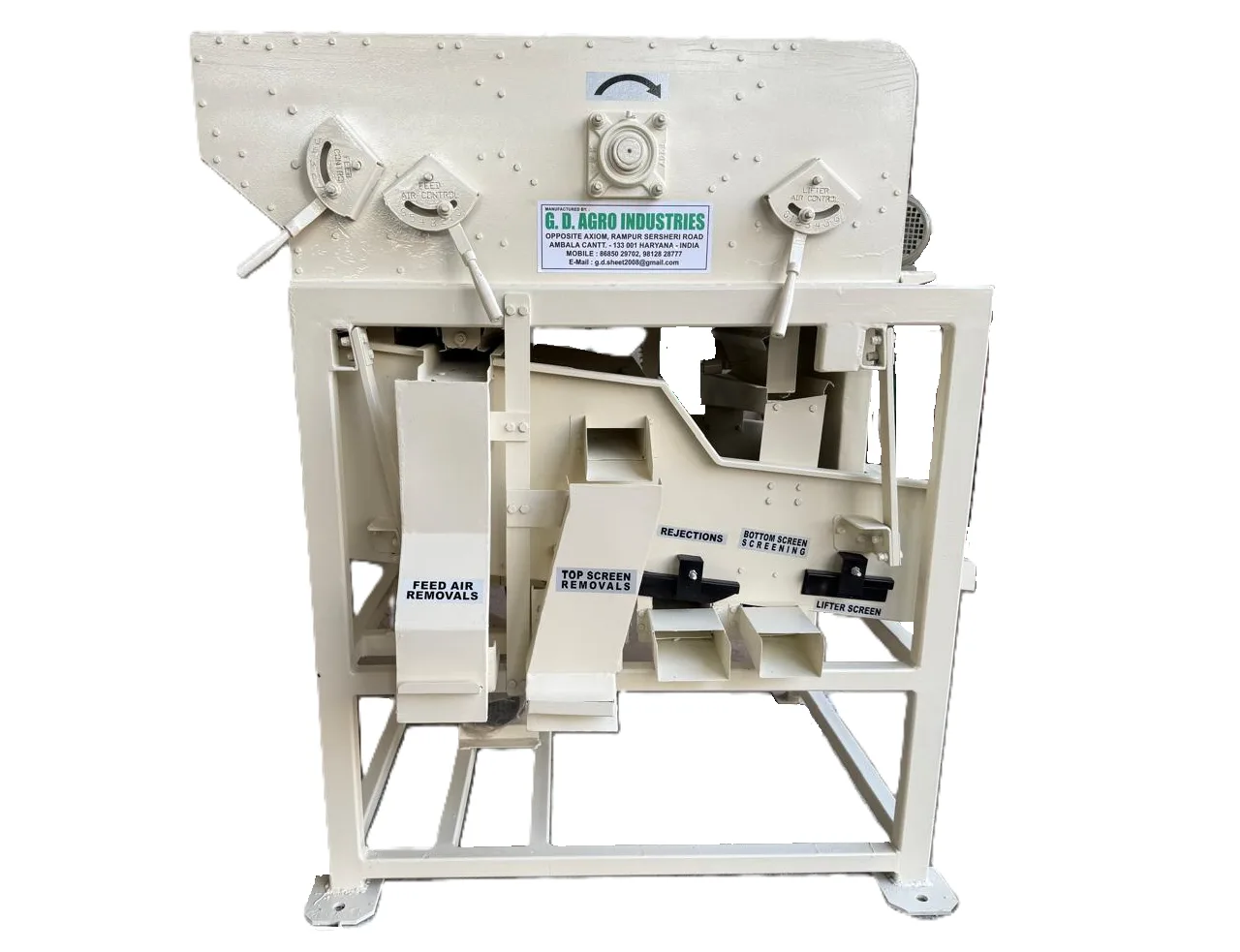
Paddy is one of India’s most important crops, but raw harvested paddy seeds contain impurities like dust, husk, broken grains, and immature kernels. A paddy processing plant removes these impurities, grades the seed, treats it, and packs it — ensuring that only the best-quality seeds reach farmers or the market.
At G.D. Agro Industries, we specialize in designing and manufacturing custom paddy processing plants tailored to your capacity and crop type.
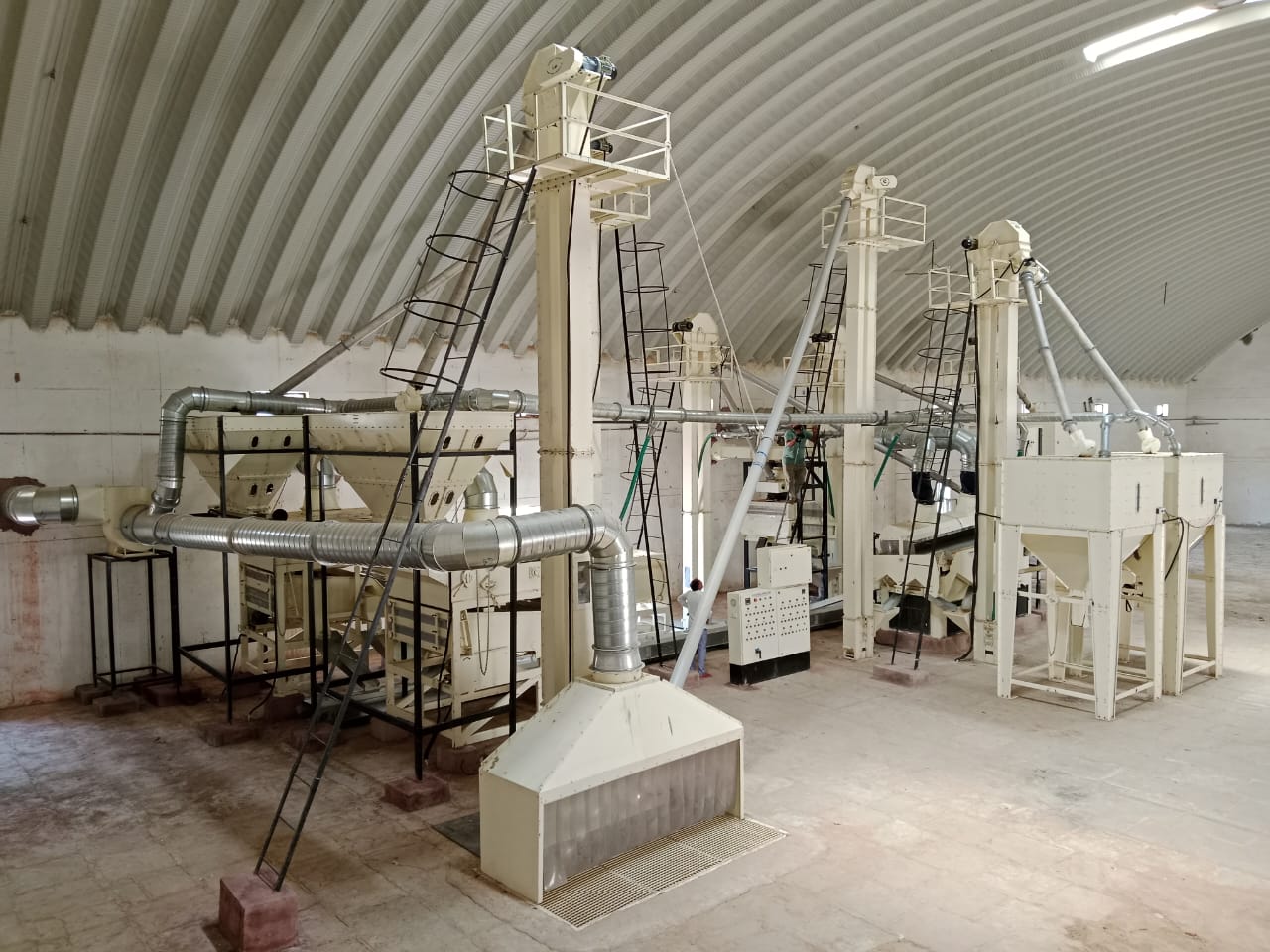
⚙️ Equipment Used in a Paddy Processing Plant
An efficient paddy processing plant includes a combination of high-performance machinery. Here’s a breakdown of the main equipment used:
✅ 1. Seed Pre-Cleaner
Removes dust, straw, sand, and light impurities. Essential for initial cleaning.
✅ 2. Seed Grader / Paddy Grader
Separates seeds based on size to eliminate undersized and oversized grains.
✅ 3. Specific Gravity Separator
Eliminates light-weight, damaged, or insect-infested seeds by density difference.
✅ 4. Slurry Seed Treater
Applies fungicides or micronutrients using a wet coating system — improves seed shelf life and disease resistance.
✅ 5. Bucket Elevator
Transports paddy seeds vertically between machines with minimal breakage.
✅ 6. Automatic Weighing & Bagging Machine and Bag Stitching Machine with Conveyor
Final seeds are automatically bagged, stitched, and stacked for transport.
For readers who want background knowledge on how rice cultivation began and developed over time, this Wikipedia article on the history of rice cultivation provides a helpful overview.
🏗️ Layout Planning for a 5 TPH Paddy Seed Plant
Proper layout ensures maximum throughput, minimal seed damage, and smooth operation. A 5 TPH (tons per hour) plant typically includes:
-
Input Section: Raw seed inlet with hopper
-
Cleaning Section: Pre-cleaner + aspiration system
-
Grading Section: Seed grader + gravity separator
-
Treatment Section: Treater with chemical dosing
-
Packaging Section: Bagging with automatic stitching
-
Control Panel Room: Electricals and automation control
-
Dust Control: Cyclone or blower units for air cleaning
🗂️ Want a free sample layout in PDF? Contact us here →
💰 Cost Factors to Consider
The total cost of a paddy processing plant depends on several variables:
| Factor | Description |
|---|---|
| ✅ Capacity | Commonly 1–5 TPH; higher capacity = higher cost |
| ✅ Automation Level | Manual, semi-auto, or fully automated |
| ✅ Material Used | MS, SS contact parts, painted/powder-coated |
| ✅ Machinery Count | More equipment = higher investment |
| ✅ Accessories | Cyclones, elevators, silos, control panels |
➡️ Exact cost depends on scope, automation and layout
🎯 Benefits of a Paddy Processing Plant
-
🌾 Increases seed purity, germination rate & marketability
-
🌱 Helps comply with government seed certification norms
-
📦 Supports large-scale seed production and export
-
💰 Delivers long-term ROI for seed companies and cooperatives
👨🏭 Who Should Invest in This?
-
Seed producers of paddy, rice, and hybrid varieties
-
Government seed corporations
-
Agricultural cooperatives
-
Private seed exporters
-
Food park or agro-hub developers
📞 Ready to Set Up a Plant?
G.D. Agro Industries offers:
-
Customized plant layouts
-
1 TPH to 25+ TPH capacity solutions
-
Installation & support PAN India and exports
-
Full machinery with warranty and spares